Business funding for pubs and bars

How a pub can borrow depends first on what you hold: a freehold gives a lender a building to secure against, a lease gives it a trading business, and a tied tenancy gives it the least of all. The money goes into buying a pub, refurbishing one, fitting a kitchen to sell food, or carrying the business through a quiet winter. A lender will check the premises licence, the trading figures and, for a tenancy, what the tie costs you.

Freehold, leasehold and tied tenancy

FreeholdLease with no tieTied tenancy or lease
What you ownThe building and the businessThe business and a lease of the buildingThe business, under an agreement with the pub company
What a lender can secureA first legal charge on the property, plus a debentureA debenture and the equipment; the lease has value only if it can be sold onThe equipment and a debenture; the pub company’s rights come first under the agreement
Funding that fitsCommercial mortgage, bridging loan to complete a purchase or a refurbishment before refinancingBusiness loan, asset finance, merchant cash advanceAsset finance, a smaller unsecured loan, and whatever the pub company itself offers under the agreement
What the lender readsThe valuation, the trading accounts and your experienceThe lease length, the rent and the trading accountsThe tie terms, the rent, the dilapidations clause and the trading accounts

The Pubs Code applies to pub-owning businesses with 500 or more tied pubs in England and Wales, and the Pubs Code Adjudicator enforces it. A tenant covered by it can, in set circumstances, ask for a market rent only option, which removes the tie. Scotland has its own regime under the Tied Pubs (Scotland) Act 2021.

The licences a lender checks

In England and Wales a pub sells alcohol under the Licensing Act 2003. The premises licence is issued by the licensing authority, which is the local council, and sets the hours and the activities allowed. Someone with a personal licence has to authorise sales, and most premises name a designated premises supervisor who holds a personal licence and runs the place day to day. Scotland licenses pubs under the Licensing (Scotland) Act 2005, and Northern Ireland under the Licensing (Northern Ireland) Order 1996.

When you buy a pub, the premises licence has to move to you, by a transfer application that needs the current holder’s consent. A lender funding a purchase will not release money until it knows the transfer is in hand, because a pub without a licence to sell alcohol is worth a fraction of one with it. Read the licence conditions as well: a terminal hour, a limit on music or a condition about door staff changes the trade you can do, and so the debt you can carry.

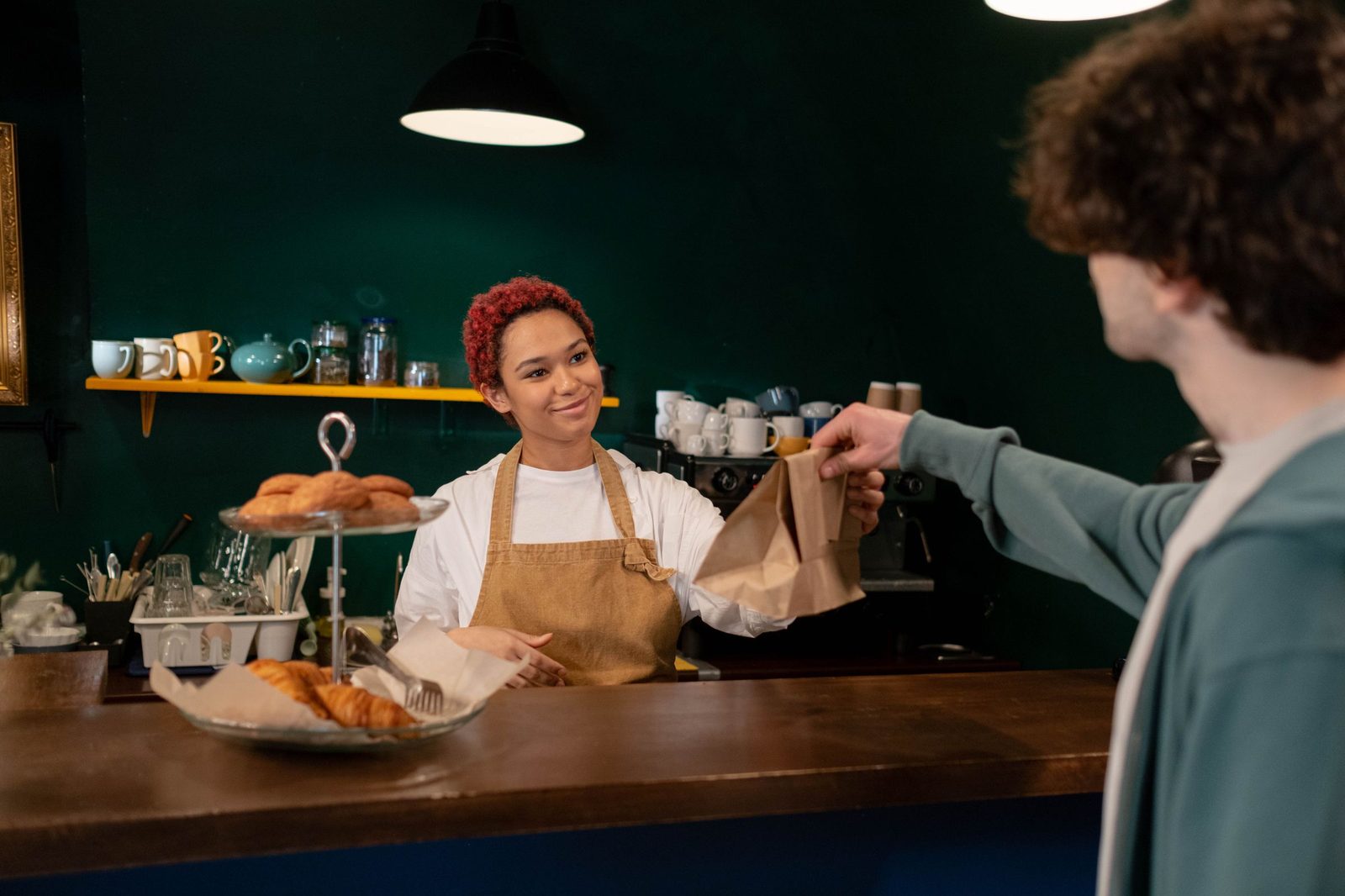
A café worker handing a bagged pastry to a customer across the counter

How a pub’s takings move through the year

A pub takes money every day across the bar and the card terminal and pays brewers, drinks wholesalers and staff weekly or monthly. December, summer weekends and big sporting fixtures lift the till; January and February take it down. Plan the repayment around the low months, and if you need a cushion for them, ask for a revolving credit facility or an overdraft sized to the gap.

Food changes the shape of the business. A pub that serves meals has a kitchen to fund and a second income line to show a lender, and the food and drink are both standard-rated for VAT at 20%. The quarterly VAT bill is a large single payment for a pub with a strong summer, and a VAT loan can spread it.

Business rates are the other fixed cost a lender will model. Pubs in England with a rateable value below £500,000 qualify for the lower retail, hospitality and leisure multipliers from 1 April 2026. Pubs and live music venues in England also get 15% off the bill for 2026 to 2027 through Pubs and Live Music Venues Relief, and the Budget on 28 October 2026 raised it to 35% from 1 April 2027.

Business rates multipliers for pubs in England, 2026 to 2027

38.2pper £1 of rateable value, qualifying pubs below £51,000
43.0pper £1, qualifying pubs from £51,000 to £499,999
50.8pper £1, every property at £500,000 and above

Source: GOV.UK, Business rates multipliers: qualifying retail, hospitality or leisure, updated 30 March 2026; GOV.UK, notification of non-domestic rating multipliers for 2026 to 2027.

What worries a lender about a pub

Lenders see pubs as a trade where the operator decides the result. Two operators in the same building can produce very different accounts, so the lender reads your record as closely as the pub’s. If you are buying, expect questions about where you have run a pub before, what its takings did under you, and how you plan to change the offer.

They also test the costs that move. Drinks prices, energy and wages all sit outside your control. The National Living Wage for workers aged 21 and over is £12.71 an hour from April 2026 and £13.21 from April 2027, and employer National Insurance is 15% on pay above £5,000 a year per employee. A lender will rework your forecast at those rates.

Have ready two or three years of accounts, current management accounts, the premises licence and its conditions, the lease or tenancy agreement with any tie schedule, wet and dry sales split by month, and a cash flow forecast that includes the new repayment. For a purchase add the agent’s particulars, a valuation and your own trading record. What lenders look at for a business loan.

Funding for the three things pubs spend on

Buying the pub

A freehold purchase is a commercial mortgage secured on the building, with your deposit and the lender’s valuation setting the size. A bridging loan can close a purchase before a mortgage is agreed, and then the mortgage repays it.

Refurbishing it

A refurbishment that adds letting rooms, a kitchen or a garden bar is paid from a business loan, and the fixed equipment can sit on hire purchase. A lender wants a costed schedule of works and a forecast of what the new space earns.

Carrying the winter

Seasonal cash is an overdraft or a revolving facility, drawn in January and repaid in summer. A merchant cash advance repaid from card takings is another route; compare its total cost first.

Your own position as the landlord or owner

A lender to a limited company that owns no property will ask the directors for a personal guarantee. If your home stands behind the loan, ask for the guarantee to be capped. What a personal guarantee means for a director.

A freehold pub held personally or in your company is part of your estate for inheritance tax, and from 6 April 2026 the 100% business relief allowance is £2.5 million, with 50% relief above it. A pub with a flat above it is a mix of trading and residential property, which affects both the relief and whether a pension scheme can buy it. Will my business pay inheritance tax? and selling your business cover the next steps.

Business loan calculator

The monthly repayment on a business loan, the interest over the term and the total you repay with the arrangement fee.

Questions people ask

Can I get a mortgage to buy a pub?

Yes. A freehold pub is bought with a commercial mortgage secured on the building, and the lender values it as a trading business, so the accounts matter as much as the bricks. Expect to put in a deposit of your own and to show a record of running licensed premises. A limited company or LLP can ask through a funding search, as can a sole trader or partnership borrowing more than £25,000. Commercial mortgages.

Can a tied pub tenant get a business loan?

Yes, but there is less to secure it against. The building belongs to the pub company, and the tenancy agreement may restrict charging the business or assigning the lease. Lenders will look at the equipment, your trading record and a personal guarantee. Read the agreement first, and check what the pub company itself offers for a refurbishment.

Does the premises licence transfer when I buy a pub?

Not automatically. In England and Wales the buyer applies to the licensing authority to transfer the premises licence, with the current holder’s consent. You also need a designated premises supervisor with a personal licence for most premises. A lender funding the purchase will want the transfer settled before completion. Scotland and Northern Ireland have their own licensing laws and procedures.

What is the Pubs Code?

It is a statutory code that governs how pub-owning businesses with 500 or more tied pubs in England and Wales deal with their tied tenants. It is enforced by the Pubs Code Adjudicator. It gives tenants rights over rent assessments and, in set circumstances, the option to ask for a market rent only lease without the tie. Smaller pub companies sit outside it, and Scotland has its own legislation.

Do pubs get lower business rates?

In England, from 1 April 2026, pubs with a rateable value below £500,000 are charged on the lower retail, hospitality and leisure multipliers: 38.2p in the pound below £51,000 and 43.0p from £51,000 to £499,999 for 2026 to 2027. Pubs and Live Music Venues Relief takes 15% off the bill for 2026 to 2027, rising to 35% from 1 April 2027. Scotland, Wales and Northern Ireland set their own rates and reliefs.

Finance is subject to status and to the lender’s terms. A personal guarantee makes you liable for the company’s debt if it does not repay, and it can be enforced against your own assets, including your home. Nothing here is a personal recommendation.

Funding by sector

Start a funding search

Funding searches run on Swoop’s platform. Swoop Finance Limited is a credit broker and not a lender, and is authorised and regulated by the Financial Conduct Authority (FRN 936513). Buzz Accounting Ltd introduces businesses to Swoop and may receive a fee from Swoop when funding is arranged. Business funding is separate from the financial advice Equity & General Financial Services Limited gives through this website. Finance is subject to status, and a lender may ask a director for a personal guarantee.

Cover for a personal guarantee

If a lender asks you to guarantee the company’s borrowing, our advisers can advise on life cover for that debt.